You can read all the articles that you want on a topic, but there's no better way of finding out about something than carrying out a piece of research yourself. Various studies have already been carried out about the factors that influence adults' intake of fruit and veg. As you may have gathered, I have quite an interest in the 5 A Day scheme, so I'd like to find out about people's knowledge of 5 A Day, what might influence that and whether this affects their intake of fruit and veg. It would also be helpful to hear what people think about the information provided by 5 A Day, as this might indicate how the scheme could be improved.
I've devised a survey online to hopefully gather all the information I need. I'm recruiting people initially from who I know on Facebook or whose e-mail addresses I have. However, I'm also using Twitter, and asking people to share the link to my survey with family, friends, colleagues or followers by whatever means they can. Fingers crossed this will generate as large a response as I can.
I'm not just after responses from those who are familiar with 5 A Day and eat a lot of fruit and veg, as my results would be very biased. So whether you are an expert on 5 A Day or know little, you love or hate fruit and veg, I want to hear from you all!
Once I have the findings I will be sharing these and my thoughts on them on here.
Please follow the link below and share it if you can.
http://www.esurveyspro.com/Survey.aspx?id=af4a9d02-420a-4dab-800e-9317194c50d0
Thanks for your help!
Saturday, 9 June 2012


Wednesday, 6 June 2012
A second helping of June's offerings...
As promised, I'm going to devote another post to this month's seasonal veg. After discussing cucumber, asparagus and broad beans, it's now the turn of curly lettuce. I think there's something very appealing about curly lettuce. Admittedly it tastes like a round lettuce, but its fancy leaves set it apart. I know that you're probably thinking "What can you do with lettuce other than pop it in a sandwich or add it to a salad?". In fairness that's a big part of what lettuce can be used for, but the key is to be creative when you're making a sandwich or salad, so that's what the suggestions below are about.
- Serve curly lettuce with a chopped avocado and mixed beans. Drizzle with a lemon and mustard dressing.
- Top curly lettuce with grated carrot and chopped Wensleydale cheese. Dress with a little olive oil and black pepper.
- Add a chopped tomato and an orange pepper to a handful of curly lettuce and watercress. A few strips of chicken breast and a fine mist of balsamic vinegar finish off the dish.
- Cook fine green beans and new potatoes. Add to make a Nicoise salad with curly lettuce, cherry tomatoes, tuna and capers.
- Slice strips of carrot, pepper and cucumber. Place on top of curly lettuce, beansprouts and strips of beef. Serve with a horseradish dressing.
- Mix diced red onion, peppers and sundried tomatoes with cooked lentils, adding mint and lemon juice. Place on a bed of curly lettuce to serve.
- Make wraps with shredded duck, cucumber, curly lettuce and lemongrass. Drizzle with hoisin sauce before rolling up.
- Fill a wholemeal pitta pocket with curly lettuce, grated carrot, hummus and raisins.
- Slice and fill a seeded bagel with curly lettuce, sliced tomato and half a tin of mackerel in spicy tomato sauce.
- Make a bean paste with kidney beans, tomato puree, chilli and black pepper. Spread on oatcakes and garnish with chopped curly lettuce.
- Top a slice of granary bread with curly lettuce, cress and prawns dressed in lemon to make an open sandwich for a light lunch.
Saturday, 2 June 2012
In the spotlight - Broad beans
Following on from my post yesterday about seasonal fruit and veg, it seems only right that I should choose a veg in season to put in the spotlight this week. It's the turn of broad beans. I can't say that these are a favourite veg of mine - I remember as a child I would remove the skin before I would consider eating them - but as variety is the spice of life, they make a nice change from the usual frozen veg. Anyone lucky enough to have their own allotment or enough space in their garden to grow veg might be familiar with podding the beans from their velvety cacoon. Though I've never sampled these raw like you might do with peas, you are meant to be able to eat them this way when the beans are young and fresh.

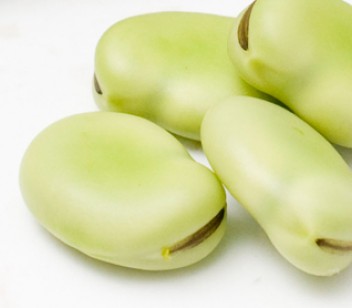
- Also called fava beans, they are thought to have become a feature of the Eastern Mediterranean diet around 6000BC.
- Broad beans can be grown in harsher climates and will manage to grow in clay soils or those with a higher salt content. If you've never grown veg before, they're a safe bet to start off with.
- Broad beans are a source of vegetable protein, Vitamin C and B vitamins, along with fibre.
- In some parts of the world - Mexico, South America, China and Thailand - broad beans are fried and then salted or spiced to produce a savoury snack.
- What might you like to do with your broad beans? Add them to stews, curries and pasta dishes; have them in a salad; mix them with rice and sweetcorn; serve them as a medley with other green veg - think courgette, green beans and cabbage.
- A type of Christmas cake, known as a "king cake", traditionally contained 1 broad bean within the mixture. When cooked, the person whose slice of cake contains the bean, is granted certain privileges. Although the bean is now often replaced with a small trinket instead, in parts of Europe and Mexico, they still use a broad bean.
- Broad beans have several significances in Italy. According to legend, all crops apart from broad beans are meant to have failed one year on Sicily and these saved the population there from starvation. They are seen as a symbol of good luck and are carried by some people. It is traditional to plant broad beans on 2nd November (All Souls' Day).
Broad bean and mint spread - perfect for topping bruschetta, oat or rice cakes.
- Cook 250g (9oz) broad beans according to pack instructions (or fresh will take about 5mins in boiling water), then drain and add to a bowl before crushing.
- Mix in 2 tsp of dried mint and a small glug of olive oil.
Broad bean salad
- Cook 250g (9oz) broad beans according to pack instructions before draining.
- Meanwhile dice an onion, and chop a tomato and half a cucumber.
- Combine all the veg with 2tbsp lemon juice, 1tbsp olive oil, 0.5tsp ground cumin and 1tsp dried parsley. Season with black pepper and mix well.
Friday, 1 June 2012
What June has to offer...
Apologies for my neglect of seasonal fruit and veg over the last 2 month. In April, there was little new compared to March, though admittedly cucumbers came into season. In May, rhubarb, spinach, curly lettuce and asparagus made an entrance. As luck would have it, all are still in season this month too, which gives me chance to discuss at least some of them, which will hopefully get me partially off the hook. June brings with it peas, broad beans, courgettes and strawberries, and carrots make another appearance. With so many items to talk about this month, I can see that we will have to have another seasonal blog post next week.
Where to begin? Cucumbers it is. They've not yet been in the spotlight, so I don't want to give too much away, but what do you think about when cucumbers are mentioned? Cucumber sandwiches with a cream tea? A few sorry-looking slices with a salad? A salad veg that you buy with good intentions, but one which you only ever use half of and the rest is enjoyed by the composter? Perhaps we need to look at a few more ideas for how you can use cucumber so that it doesn't go to waste.
As cucumbers are mainly made of water, unless you plan to pickle them, they are best eaten cold. Try the following:
Spinach and rhubarb have already snuck into this blog previously, so I'll now turn my attention to asparagus. I'd imagine for a lot of people, asparagus doesn't go on the shopping list very often; I know for myself, it's a veg to have as a treat or for a special occasion. If I'm honest I'll usually serve it on the side as an accompanying veg, but I'm always on the look-out for new ideas. It seems popular stirred through pasta, part of a tart, an addition to a salad or an omelette. I remember a while ago, Pizza Express had a pizza topped with asparagus, which I thought was a novel way to serve it. How do you like your asparagus?
Where to begin? Cucumbers it is. They've not yet been in the spotlight, so I don't want to give too much away, but what do you think about when cucumbers are mentioned? Cucumber sandwiches with a cream tea? A few sorry-looking slices with a salad? A salad veg that you buy with good intentions, but one which you only ever use half of and the rest is enjoyed by the composter? Perhaps we need to look at a few more ideas for how you can use cucumber so that it doesn't go to waste.
As cucumbers are mainly made of water, unless you plan to pickle them, they are best eaten cold. Try the following:
- Chopped into small chunks they go well with tinned tuna and salmon sandwiches. Sliced you'll find them in cold meat sandwiches.
- For those of you who perhaps like bean pate or hummus, I'd imagine cucumber could add the finishing touch to crackers, oatcakes or toast topped with said fillings.
- Add chopped cucumber to pasta, rice or couscous based salads with whatever other chopped salad veg you fancy.
- Not all salsas are hot, think of the phrase "as cool as a cucumber".
- Deseed and chop a cucumber and a yellow or orange pepper
- Chop a tomato and a small onion
- Mix the above ingredients with 1tbsp lime juice, 1tsp coriander, 1 tsp parsley and a minced clove of garlic
- Keep in the fridge till serving as an accompaniment to Mexican fare.
Spinach and rhubarb have already snuck into this blog previously, so I'll now turn my attention to asparagus. I'd imagine for a lot of people, asparagus doesn't go on the shopping list very often; I know for myself, it's a veg to have as a treat or for a special occasion. If I'm honest I'll usually serve it on the side as an accompanying veg, but I'm always on the look-out for new ideas. It seems popular stirred through pasta, part of a tart, an addition to a salad or an omelette. I remember a while ago, Pizza Express had a pizza topped with asparagus, which I thought was a novel way to serve it. How do you like your asparagus?
Sunday, 27 May 2012
In the spotlight - Peaches
After a few weeks of covering fruits that masquerade as vegetables, it's time to go back to a fruit where there's no quibble over what it is, so I've plumped for peaches. No particular reason for my choice, though I do enjoy them regularly, even if they are from a tin - I find chopped, they are a nice addition to porridge.


- Although they originate in China, they have been referred to as "Persian apples" as they made their way into Europe via Persia along the silk routes.
- There are hundreds of varieties of peach and nectarines are not a separate fruit, they are a smooth skinned variety of peach.
- Italy is the 2nd largest producer of peaches in the world. No surprise then that the Bellini - a drink made from peach puree and sparkling wine/champagne - originated in Italy.
- Peaches are good for topping up your intake of Vitamin C and Betacarotene.
- There's only so many time you can have a peach melba, so how else might you serve them? Like a lot of fruits, they make a nice addition to fruit salads and cereal. However, they also work in savoury dishes - think salads and fruity sauces.
- They are a symbol of good luck and longevity.
- Peach juice is thought to be a good moisturiser and often finds its way into cosmetics.
Spiced peach couscous - a side dish with a kick
- Prepare the couscous according to the pack instructions, adding 3tbsp raisins.
- Cook a chopped red onion in a little oil until softened, then add 1 small diced chilli and 1 chopped peach with the skin removed - you can use a third of a can of drained tinned peaches instead. Stir and cook for about a minute.
- Add the couscous to the pan, along with 0.5 tsp each of curry powder, coriander and mint.
- Heat through for a few minutes on a low heat then serve.
Peach soup - a refreshing way to end a meal
- Drain 2 cans of peach slices (reserve half a can) and blend with 175ml pineapple juice and 125ml orange juice until smooth.
- Add 150g natural yoghurt, 75ml dry white wine, 1tbsp lemon juice and 0.25 tsp cinnamon. Blend until smooth.
- Chop the remaining peaches and stir through the soup.
- Chill until it is time to serve then garnish each bowl with a few raspberries.
Sunday, 20 May 2012
In the spotlight - Aubergines
I've always shied away from cooking with aubergines, not that I dislike them - I've enjoyed them in ratatouille and moussaka previously - but the faff of having to pre-salt them to remove their bitterness had put me off. However, I have recently discovered that while not exactly a myth, it is not now necessary to pre-salt aubergines, as apparently the bitterness has been bred out of them. So with this new-found knowledge, I dug out an old recipe for an aubergine bake (adapted below) and off I went. I can now gladly say that aubergines will be firmly staying on the menu.


- Also known as eggplant and brinjal (and its literal translation from Italian is "crazy apple"), aubergines like tomatoes belong to the nightshade family. While some people with arthritis choose to avoid this family of plants, there isn't any good evidence that eating these worsen arthritis and in fact their antioxidants may be beneficial in slowing its progression.
- They originate from India and while we might be used to the purple variety, aubergines also come in white, yellow, green, two-tone and striped.
- You might not associate foods with nicotine, but aubergines contain the most of any type of food - tobacco also belongs to the nightshade family. However, the levels still remain very low - you would have to eat 20lb to get the equivalent of smoking a cigarette.
- Whilst perhaps being low in vitamins, they are a source of fibre and the deep colour of their skin certainly makes the purple varieties rich in antioxidants.
- Aubergine does tend to absorb a lot of oil due to all its air pockets. No one likes greasy aubergine, so salting them prior to cooking can help to reduce the problem of oil absorption. To salt an aubergine, cut into thick slices, add a generous amount of salt to the surface and then after half an hour rinse them thoroughly to remove the salt.
- You have Elizabeth David - an influential cookery writer - to thank for aubergine becoming an addition to the British menu. Following her travels, she introduced the idea of cooking with a number of Mediterranean foods to our kitchens.
Aubergine bake - serves 2
- Chop a small onion and fry in a little oil till softened.
- Add 1 chopped clove of garlic and cook for a further minute.
- Add a 400g tin of chopped tomatoes, a tsp of mixed herbs and pepper to taste.
- Stir and simmer until a thick sauce has formed.
- Meanwhile chop an aubergine into half-centimetre thick slices, brush with a little oil on each side and griddle for a few minutes, turning halfway.
- Place a layer of aubergine in the bottom of a small pyrex dish, cover with a layer of the tomato sauce, then repeat.
- Sprinkle a handful of grated cheese on the top and cook covered at 180 degrees C (gas mark 4) for 30 mins.
- Enjoy with a green salad and a slice of crusty bread.
Aubergine and chickpea salad - serves 2
- Chop an aubergine into half-centimetre slices, lightly oil on each side, then place on a baking tray under a medium grill. Cook on each side for 4-5 mins or until tender, then cut each slice into 4.
- Slice a small red onion finely and add to a bowl with the aubergine, half a drained can of chickpeas and a small handful of chopped coriander.
- Make a dressing by adding to a small screw-top jar 1tsp each of paprika, cumin and honey, the juice of a lemon and 2tbsp olive oil. Shake well, then drizzle over the salad.
- Serve with green salad and couscous.
Thursday, 3 May 2012
In the spotlight - Avocados
- Another fruit disguised as a vegetable!
- Native to central and South America, avocados are also known as "alligator pears", no doubt based on the appearance of their skin and shape.
- Avocados are a source of Vitamin C, E and various B vitamins.
- Unusually for fruit and veg, avocados are relatively high in fat, with one small avocado containing approximately 18g fat, though two-thirds of this fat is heart-healthy mono-unsaturated fat.
- Avocados are thought to be good for the skin and a mashed avocado can be applied as a face mask.
- The flesh will soon brown once peeled, but adding lemon or lime juice will help prevent this happening. Avocados are usually served raw, as cooking tends to spoil them.
So apart from guacamole and serving in a salad, what else can you do with avocados?

- In some parts of the world avocados are incorporated into smoothies with other fruits and are also used an ingredient to milk-based desserts.
- Spread mashed avocado on toast as an alternative to peanut butter.
- Chunks of avocado can be used as part of a sandwich filling, but as they contain little protein, for balance you're best to team them with another source such as pulses or cheese.
- For a baked potato filling, combine half a mashed avocado with a small handful of grated cheese and a little natural yoghurt. Add cumin, chilli powder and black pepper to taste.
- Try stuffing the hollow of halved avocados - spiced bean salad, mashed hard boiled eggs with tomatoes or cottage cheese with chives are all possibilities.
Chocolate mousse - try this very simple dessert; you'll never know the fruit is even there
- Blend the flesh from 2 avocados and 2 peeled, chopped bananas with 125ml milk and 3tbsp cocoa powder
- Leave to chill in the fridge for at least 2 hours before serving
Avocado and tomato salsa - the perfect addition to Mexican dishes
- Chop the following finely - the flesh from an avocado, a tomato, half a red onion and half a chilli
- Add 3tbsp lime juice and mix the ingredients well
- Chill for at least 30mins and garnish with coriander leaves
Subscribe to:
Posts (Atom)